

Last Updated: June 5, 2026
Setting Up Microsoft Project for the Master Class Exercises
One of the values built into this Master Class is the Microsoft Project exercises. They are designed for users to repeat an exercise until things jell or the light bulb goes on. Although practices are common in software training, many “experiences in Microsoft Project” have been developed over the years, drawing on work with thousands of users since the first version of Project. Many reflect my experience watching people struggle with particular concepts, ideas, and features.
Typically, people follow the instructions in an MS Project exercise with different intentions. Some people follow the instructions while attempting to grasp the gist of the activity and do not worry too much if their results perfectly match the figures in the exercise. Other people are motivated to ensure their results match the figures shown in the exercise.
New to the MS Project Master Class?
If you found this page through a search engine or external link, use the Start Here button below to learn about the Free and Complete MS Project Master Classes, the Learning Portal, Project MAP framework, Activity Workspaces, exercises, and the Master Project.

This illustration identifies the Microsoft Project desktop versions supported by the MS Project Master Class and explains that differences in software versions, updates, and settings can affect exercise results.
Become a Coach or Trainer < Setting Up Microsoft Project > Clarify Project Objectives
There are three reasons it is often difficult to get your outcome in Microsoft Project to exactly match the outcome in an exercise.
Different Global settings in Options.
Different software versions, service packs, and updates.
A slightly different sequence of data entry.
Microsoft Project results can vary due to software settings, versions, updates, calendars, resource assignments, and the order of data entry. Before starting the Master Class exercises, review the settings described on this page to ensure the most consistent results possible.
Global Selections in Options
Your global settings (applied to all open projects) in Microsoft Project may differ from those used when completing an exercise in an Activity Workspace. For the best results, unless otherwise directed, make these global selections in Options before working through any exercise in Microsoft Project.
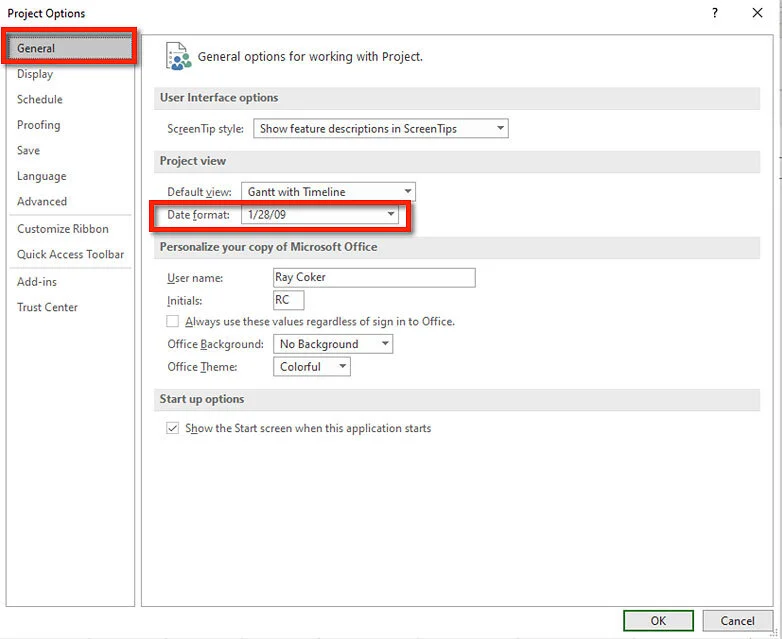
Figure 1. General Options. The General Options dialog contains global Microsoft Project settings that affect how the application behaves. Configuring these options before beginning the Master Class helps ensure a consistent learning experience across all exercises.
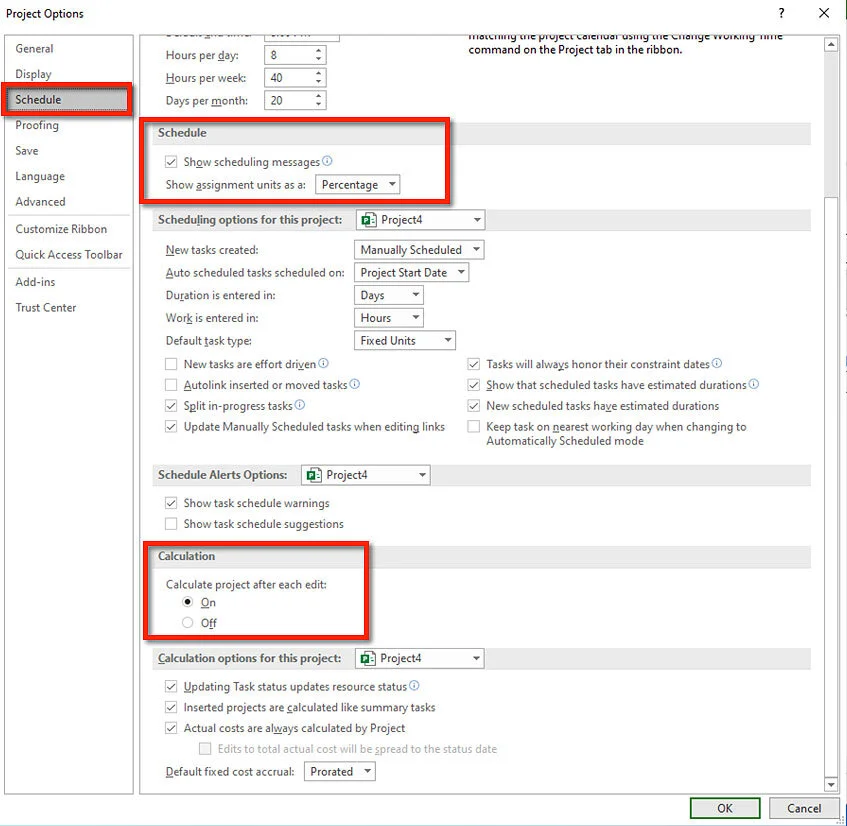
Figure 2. Schedule Options. The Schedule Options dialog controls how Microsoft Project schedules and recalculates project information. These recommended settings help students produce consistent scheduling and calculation results.
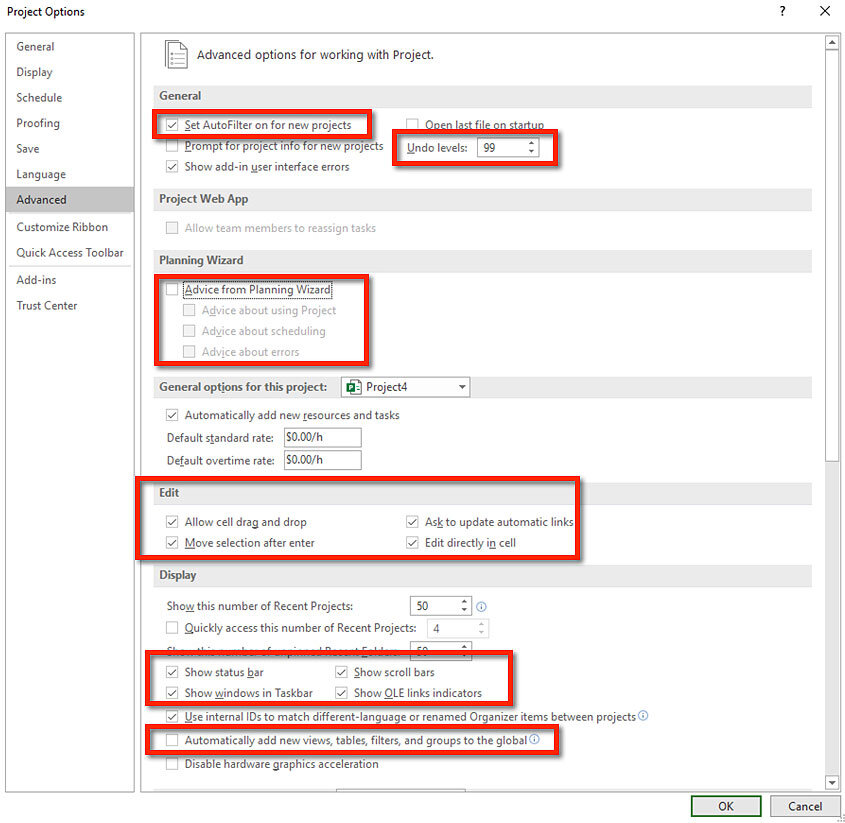
Figure 3. Advanced Options. The Advanced Options dialog contains important application settings that influence planning behavior, editing, display options, and template management. Configuring these settings improves consistency and reduces unnecessary prompts during the exercises.

Most of these selections in Options are user preferences. The Advice from Planning Wizard selections are usually turned off because they are nuisance suggestion popups that often recommend selections that can be confusing and, at times, inappropriate. The Planning Wizard, reminiscent of the Office Assistant “Clippy," is something we highly recommend turning off.
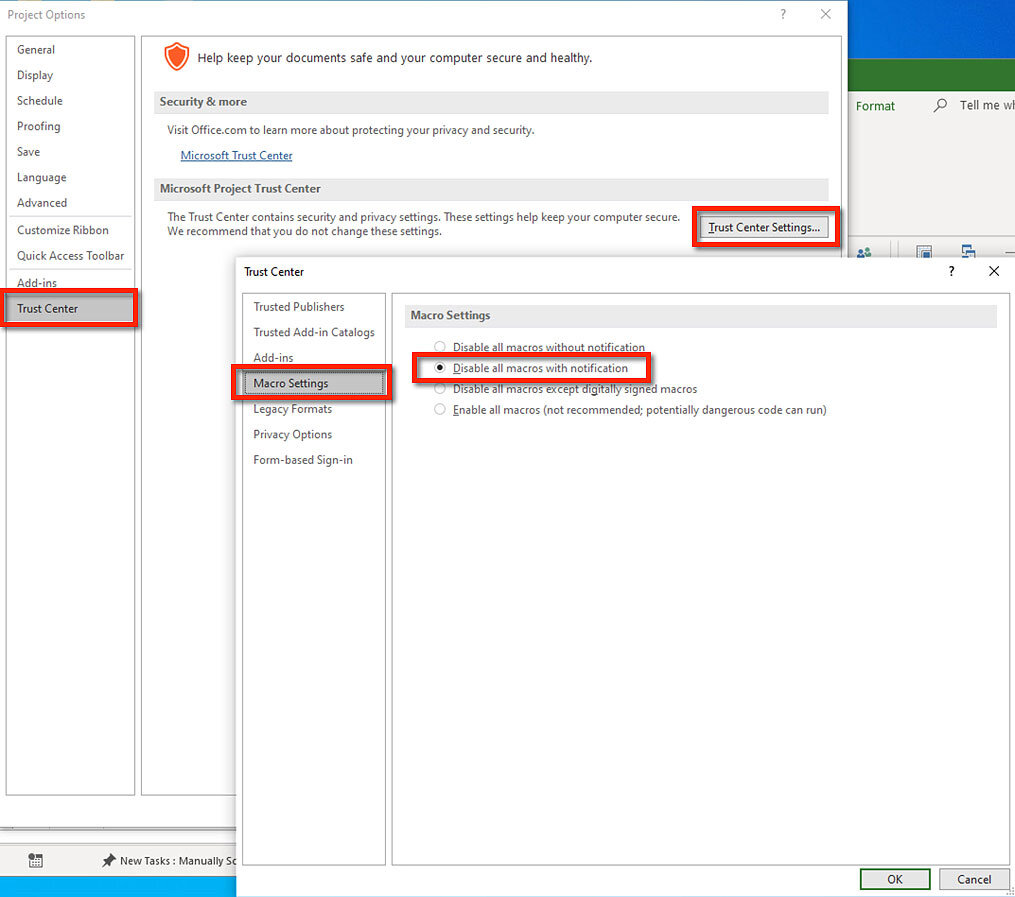
Figure 4. Trust Center Options. The Trust Center Options control Microsoft Project security settings, including macro behavior. These recommended settings help ensure that Master Class exercises function correctly while maintaining appropriate security.
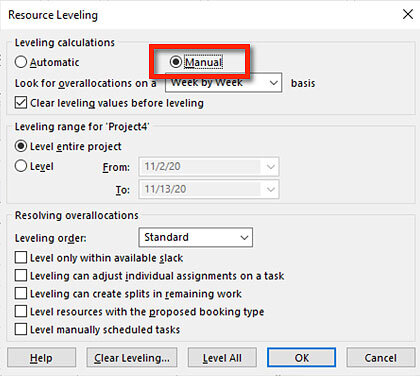
Figure 5. Manual radio button in the Resource Leveling dialog box. The Resource Leveling dialog should be configured to Manual so Microsoft Project does not automatically modify task schedules during the exercises, helping students obtain consistent results.
In addition, another global setting in another location is Resource Leveling. Be sure Automatic Resource Leveling is turned off. Resource tab / Leveling Options command / Manual radio button selected.
Software Versions, Service Packs, and Updates
The version of Microsoft Project, the version type (stand-alone vs. the Online Desktop Client), Service Pack, Build, and last update applied can impact differences in appearance and calculations.

Note
For this Master Class, you should have Microsoft Project, either the Standard or Professional desktop version, 2019, 2021, or 2024. For the best results and to increase the likelihood that your exercise results closely resemble those in this Master Class, update to the 2021 version. You should ensure you are up to date if you are using the subscription version.
The following information is critical, but the review intends to point out that when you complete exercises in this Master Class, your results will be a function of your settings in Microsoft Project, your version, build, and update status, and, at times, the order in which you do things. Given the complexity involved, my recommendation is that you focus on understanding the feature, tool, or techniques being illustrated rather than the “exact” results as you would most certainly do when using accounting software.
Microsoft could provide a clearer understanding of what version is being used.
For instance, I have the Professional (not the Standard) Microsoft 365 version, which allows me to connect with Project Server, which I do regularly. Because Microsoft Project is a subscription-based Microsoft 365 app, I assume that when I apply the Office Update under my Account page in Microsoft Project, I am up to date with the latest and greatest.
If you have purchased Microsoft Project or have a version that is part of your organization’s enterprise agreement, you likely have a slightly different set of information in About Project. Microsoft 365 is a subscription service that ensures you always have the most up-to-date modern productivity tools from Microsoft. This is a licensed version that is paid for monthly or annually. I know from the literature on Microsoft Project that the most current version is 2021. As noted in the figure below, I am updated. Thus, a 365 version is always current if updated by the user. Since there are multiple versions, types, builds, and updates, I would prefer clearer communication from Microsoft. For instance, the figure below shows that this is a subscription product: Microsoft Project Online Desktop Client. That is a confusing name for someone who is just starting to use the software.
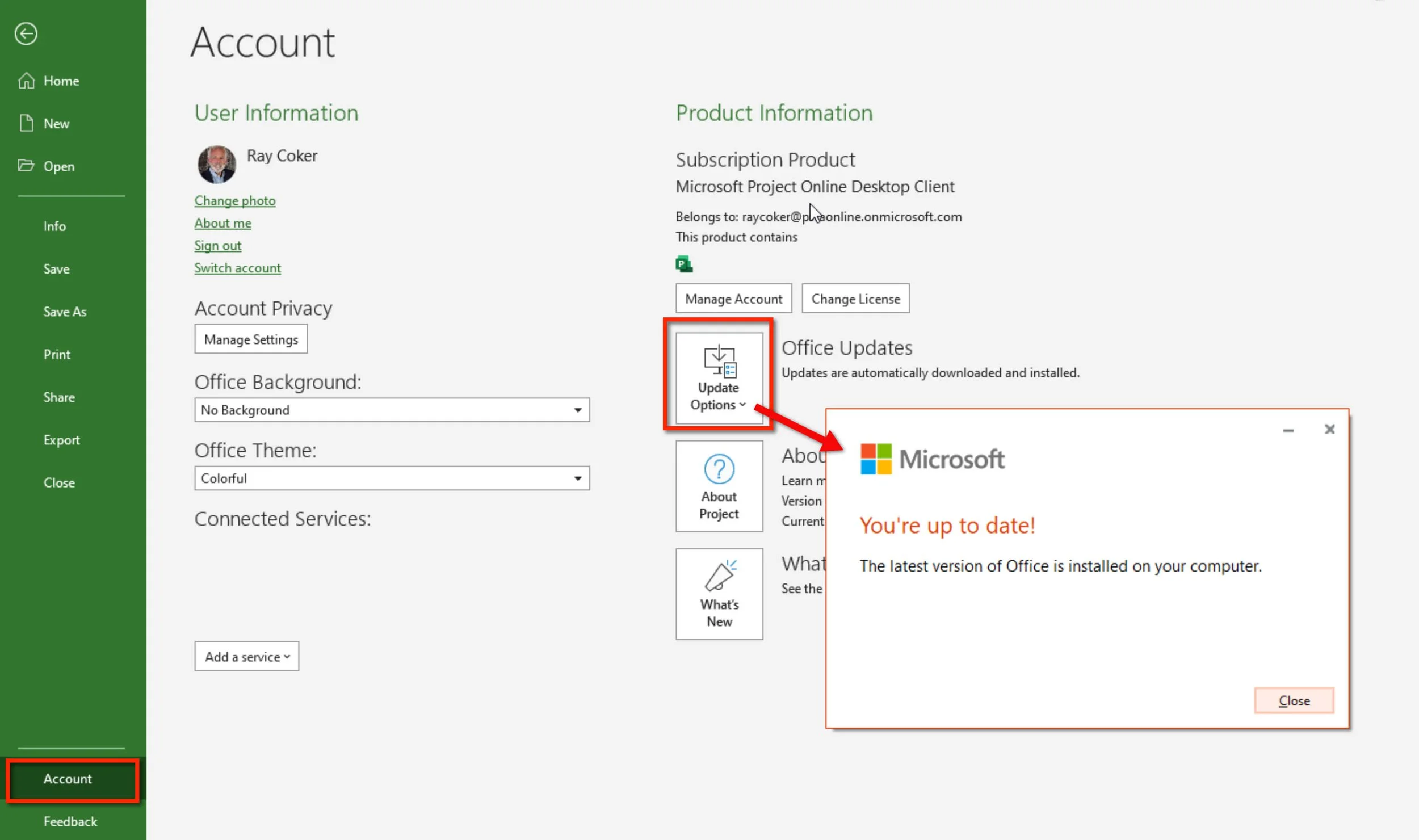
Figure 6. Update options. The Update Options command allows you to verify and install the latest Microsoft Project updates, helping ensure your software version closely matches the version used throughout the Master Class.
As of this writing, and after updating, the next figure is my About Project. This is not at all what I expect or want to see.
I expect and want to see Microsoft Project Professional Desktop (registered trademark), version 2021, current update…, with maybe a reference to Microsoft 365.
First, and this is a bit off-topic, but the word Project in About Project is not a registered Microsoft trademark, as noted in the figure below. Microsoft Project Server, and so is Excel, PowerPoint, and SharePoint. But not Project alone, nor are the two words “Microsoft Project” written together a registered trademark. The same holds true for Word. Word is not trademarked by Microsoft, nor is “Microsoft Word.” In my About Word, the trademark is correct, but not in About Project.
Second, the information in About Project does not tell me I have the Professional 2021 or the Microsoft 365 version, it tells me I have the “Online Desktop Client MSO“ version. Desktop and Client are redundant terms unless it is saying that it is both the desktop version and the fat client (vs. Project Web App being the thin client) to Project Server. I believe MSO refers to Microsoft Office, and Microsoft Project is part of Microsoft Office.
Most confusing. Although as software users, we are familiar with the idea of versions. The following is a list of Project versions, and the type of list you might observe when on a Microsoft site reviewing features and commands online:
Project Online Desktop Client, Project Professional 2024, Project Standard 2024, Project Professional 2021, Project Standard 2021, Project Professional 2019, Project Standard 2019, Project Professional 2016, Project Standard 2016, Project Professional 2013, Project Standard 2013, Project 2010, Project Server 2010, Project Standard 2010, Project 2007.
Project Online Desktop Client is the Microsoft 365 version. It is the one version that is always current if updated by the user. The figure below shows a view in the Project Online Desktop Client. This version’s version is 2112, Build 14729. 20194. The version within a version can be searched online to determine its status.
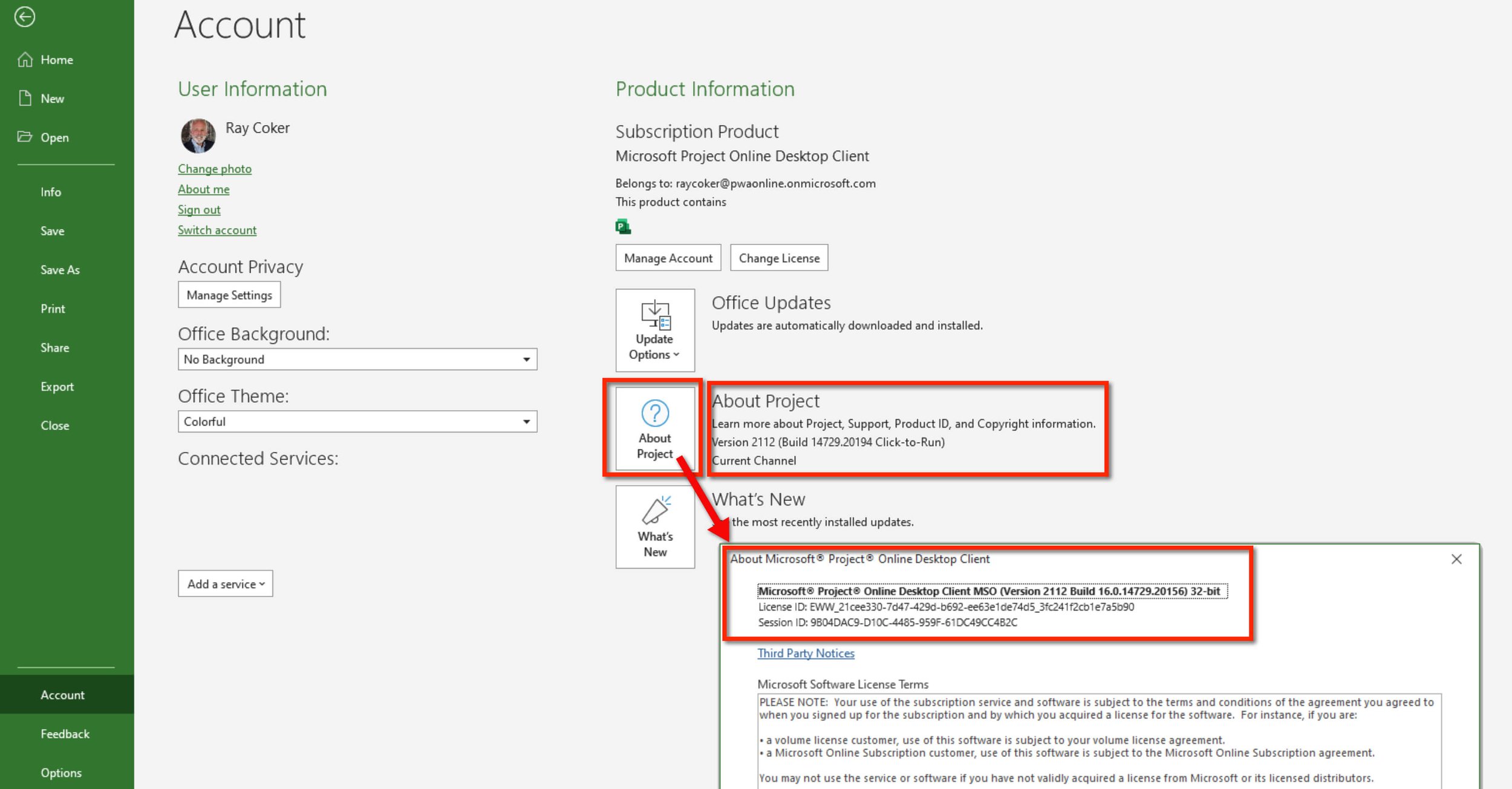
Figure 7. About Project. The About Project dialog provides version, build, licensing, and subscription information that helps identify the Microsoft Project edition being used during the Master Class.
I can look up Microsoft 360 versions, as shown in the figure below. The current version is 2112, which I have for all of my Office apps, including Project. I have also learned from Microsoft that Microsoft 365 is the same as Office 2021. So, I am pretty certain I have Project 2021, but I am still not 100% sure because it is not confirmed in the About Project section.
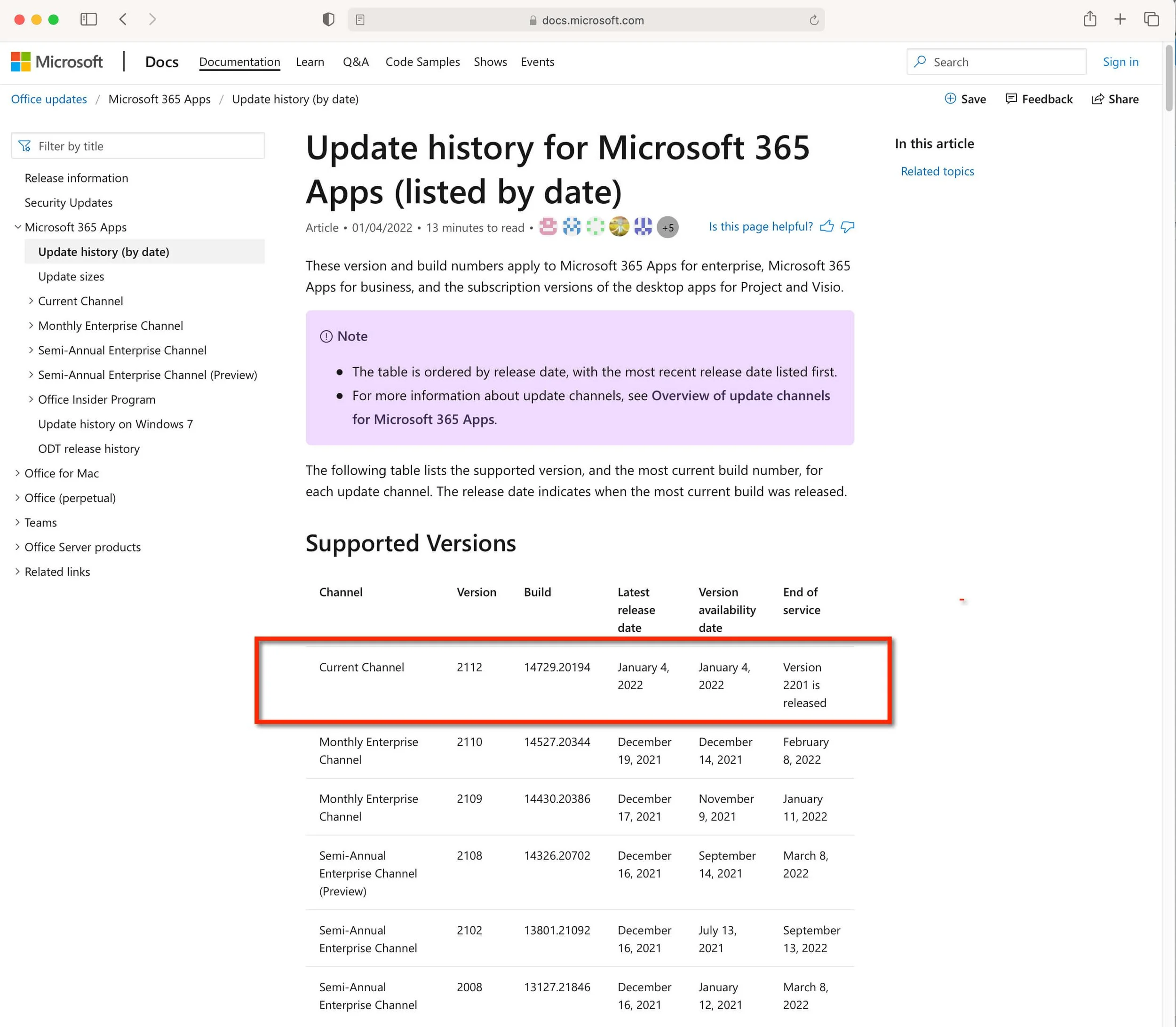
Figure 8. Version history for Microsoft 365. The Microsoft 365 Update History helps users verify whether their installed Microsoft Project build is current and understand differences between software releases.
The figure below shows the Account information for an earlier version of Microsoft Project. The Product Information tells the user that it is the Professional 2016 version. The trademarks are correct, and the Product Information is pretty clear on the version, but it does not say much about the update status.
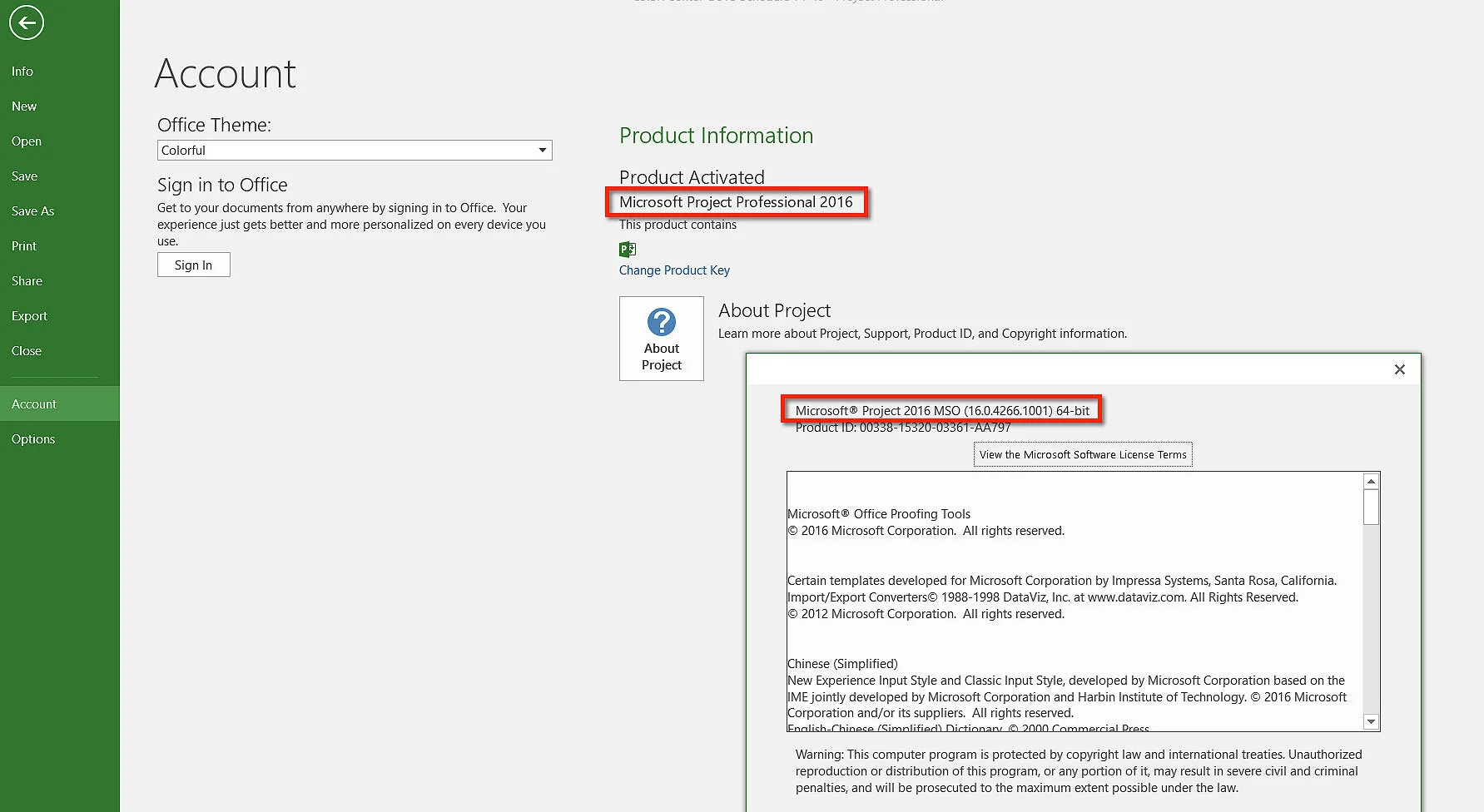
Figure 9. Professional 2016 version. Microsoft Project Professional 2016 displays product version information differently than Microsoft 365 subscription editions, making version identification easier.
The types of differences to expect, depending on the version and update status
For example, when reviewing one exercise with a colleague, we noticed several slight differences between what I saw on my screen and what was on her. In the next figure, we noticed slight differences in calculations and appearance. In addition, although my version and build were the latest, there was a slight difference in calculations; for instance, the total work for one task was 16.98 hours, and the other project was 16.99 hours. In addition, the overallocated symbols in the Indicators column were different.
Some people find this disturbing. I recommend thinking about it this way: " It is Likely that the example in the exercise was completed with a different version or even an update.” “It is a slight rounding difference, nothing to be concerned about.”
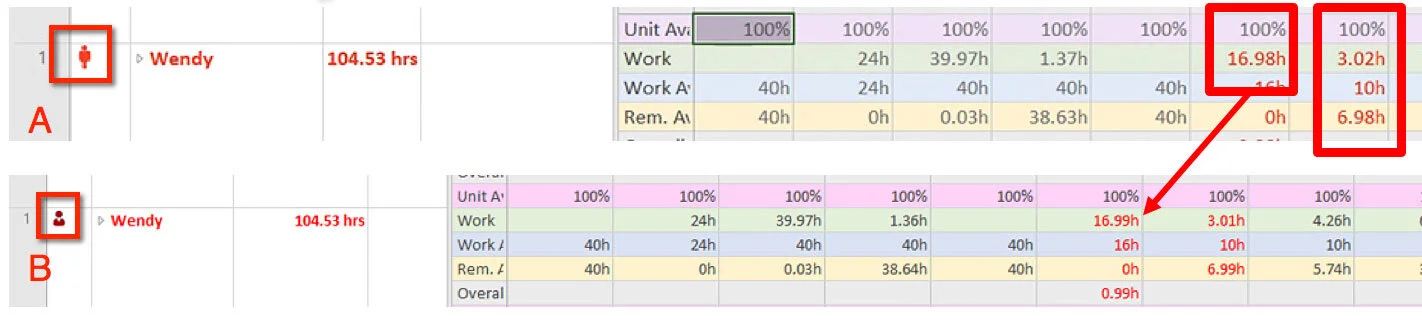
Figure 10. Slight differences in calculations and appearance between software updates. This comparison demonstrates that different Microsoft Project versions and updates can produce slight differences in calculations and appearance while still generating technically correct schedules.
Sequence of Data Entry
The order in which you perform certain activities, such as making resource assignments and updates, can affect the calculation's results. If your results must be exactly like those shown, follow the same sequence of steps. If you get out of step, disregard the file you are working on, download it again, and start the exercise fresh.
Microsoft Project is not Excel, even though both have calculated columns. Microsoft Project is a tool with a wide range of selections that calculates things like Work on a task based on resource assignments. Think of building a project, Microsoft Project, as preparing a meal. Take a list of ingredients for a dish, rearrange them in a slightly different order, and the results could differ from someone else's.
Setting Up Microsoft Project for the Exercises FAQs
Why Do My Microsoft Project Exercise Results Look Different?
Your Microsoft Project results might look different if your Options settings, software version, build, update status, or the order you enter data are not the same as those used in the exercise. You may notice small changes in how things look, indicators, rounding, or calculations.
What Microsoft Project Settings Should I Check Before Starting?
Before you start the Master Class exercises, check your Microsoft Project Options. Look at the General, Schedule, Advanced, Trust Center, and Resource Leveling settings. Make sure to turn off Automatic Resource Leveling and use Manual Leveling instead.
Why Should Automatic Resource Leveling Be Turned Off?
Automatic Resource Leveling can change when you modify resource assignments, resulting in results that differ from the exercise files. To keep your results consistent, set Resource Leveling to Manual.
Which Version of Microsoft Project Should I Use?
For the best experience, use Microsoft Project Standard or Professional desktop versions 2019 or 2021, or an updated Microsoft 365 Project desktop version. The version, build, update status, and subscription type can all change how things look and how calculations work.
Why Should I Focus on Understanding Rather Than Exact Results?
Since Microsoft Project calculations can vary depending on your settings, version, build, updates, and the order in which you enter project data, focus on learning how the feature, tool, or technique works. Don’t worry if every number or visual indicator isn’t exactly the same.
What Should I Do If My Exercise File Gets Out of Step?
If you need your results to match exactly and your file is out of sync with the exercise, the best way to fix it is to download a new copy of the file and restart the exercise, following the same steps.
Why Does the Order of Data Entry Matter in Microsoft Project?
Microsoft Project works like a calculation engine. The order you enter resources, dates, durations, work, and updates can change the results, especially in exercises with assignments or progress updates.
What Is the Most Important Lesson from This Setup Page?
The key takeaway is that Microsoft Project is not just a simple spreadsheet. It builds schedules based on your settings, assignments, calendars, logic, and the order of your steps. It’s more important to understand how the software works than to make every exercise result match exactly.